AI Resume Optimizer: Transform Your Job Applications with Smart Technology
Discover how an AI resume optimizer can boost your job search success. Learn about ATS optimization, key features, and how to choose the best tool in 2026.
AI Resume Optimizer: Transform Your Job Applications with Smart Technology
In today's competitive job market, your resume has approximately 6-7 seconds to make an impression on a hiring manager—but only if it gets past the initial screening. Here's a sobering reality: according to recent studies, over 75% of resumes are rejected by Applicant Tracking Systems (ATS) before a human ever sees them. This statistic reveals a critical challenge facing modern job seekers: crafting a resume that satisfies both automated screening systems and human recruiters.
Enter the AI resume optimizer—a revolutionary technology that's transforming how job seekers approach their applications. These intelligent tools leverage artificial intelligence and machine learning algorithms to analyze, enhance, and optimize resumes for maximum impact. Whether you're a recent graduate entering the workforce, a mid-career professional seeking advancement, or an executive exploring new opportunities, an AI-powered resume optimization tool can be your secret weapon in standing out from the competition.
This comprehensive guide will explore everything you need to know about AI resume optimizers. We'll examine how these tools work, the key features that make them effective, how to choose the right optimizer for your needs, and best practices for maximizing their potential. By the end of this article, you'll understand why incorporating an AI resume optimizer into your job search strategy isn't just an advantage—it's becoming essential for career success in the digital age.
Understanding How AI Resume Optimizers Work
The Technology Behind Resume Optimization
An AI resume optimizer operates on sophisticated algorithms trained on millions of successful resumes, job descriptions, and hiring patterns. These systems use natural language processing (NLP) to understand context, meaning, and relevance within your resume content. Unlike simple keyword-matching tools, modern AI-powered resume builders analyze semantic relationships, identifying synonyms and related concepts that align with job requirements.
The optimization process typically begins with parsing your existing resume, breaking it down into structured data points such as work experience, skills, education, and achievements. The AI then cross-references this information against current industry standards, successful resume patterns, and specific job descriptions you're targeting. Machine learning models evaluate factors including keyword density, formatting consistency, achievement quantification, and overall readability.
Advanced AI resume optimization tools also incorporate predictive analytics, estimating your resume's likelihood of passing ATS screening and appealing to human reviewers. Some platforms analyze millions of job postings in real-time, identifying trending skills and qualifications within your industry. This dynamic approach ensures your resume stays relevant in rapidly evolving job markets.
ATS Optimization: Breaking Through the Digital Gatekeeper
Applicant Tracking Systems represent one of the biggest obstacles in modern job searching. These software applications help companies manage large volumes of applications by automatically screening, sorting, and ranking resumes based on predefined criteria. Research indicates that companies using ATS reject approximately 70-75% of applications automatically, often eliminating qualified candidates due to formatting issues, missing keywords, or poor resume structure.
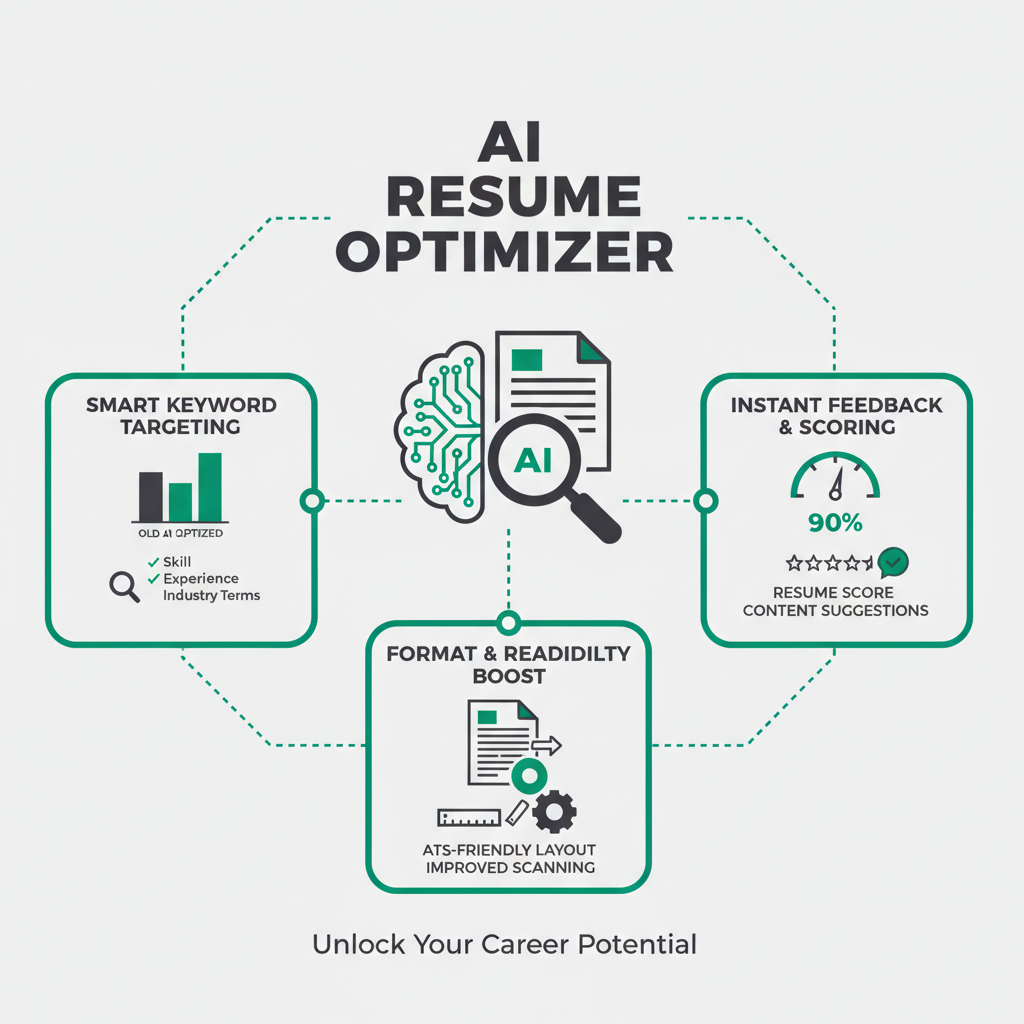
An effective resume optimization tool addresses these challenges head-on. It ensures your resume uses ATS-friendly formatting—avoiding complex tables, graphics, or unusual fonts that confuse parsing algorithms. The AI identifies critical keywords from job descriptions and naturally integrates them throughout your resume without awkward keyword stuffing that human readers would find off-putting.
Beyond basic keyword matching, sophisticated AI systems understand contextual relevance. For instance, if a job posting seeks "project management experience," the AI recognizes that phrases like "led cross-functional initiatives," "coordinated team deliverables," or "managed stakeholder communications" demonstrate relevant experience, even without exact keyword matches. This nuanced approach helps your resume rank higher in ATS scoring systems while maintaining authentic, compelling language.
Real-Time Feedback and Continuous Improvement
One of the most powerful aspects of AI resume optimizers is their ability to provide instant, actionable feedback. As you make changes to your resume, the AI continuously analyzes improvements in real-time, offering suggestions for enhancement. This iterative process helps you understand not just what to change, but why those changes matter.
Modern platforms often include scoring systems that rate your resume's overall effectiveness on scales measuring ATS compatibility, keyword optimization, formatting quality, and content strength. Many tools also provide competitive analysis, showing how your resume compares to others in your field or targeting similar positions. This data-driven approach removes guesswork from resume writing, replacing it with evidence-based optimization strategies.
Key Features of the Best AI Resume Optimizer Tools
Intelligent Keyword Analysis and Integration
The cornerstone of any quality AI resume optimizer is its keyword analysis capability. Top-tier tools don't simply identify keywords—they understand keyword context, relevance, and optimal placement. When you input a target job description, the AI extracts both obvious and subtle skill requirements, industry terminology, and qualification indicators.
These systems then analyze your current resume to identify gaps between your content and job requirements. Rather than recommending you artificially insert keywords, sophisticated AI suggests genuine ways to restructure your experience descriptions to highlight relevant skills. For example, if "data visualization" appears frequently in job postings but doesn't appear in your resume, the AI might identify projects where you created reports or presentations, suggesting you explicitly mention the visualization tools or techniques you used.
Premium AI-powered resume tools also track keyword saturation, preventing over-optimization that could trigger ATS spam filters or appear unnatural to human readers. They maintain balance between keyword optimization and readability, ensuring your resume satisfies both automated systems and hiring managers.
Industry-Specific Customization
Not all resumes should look the same—expectations vary dramatically across industries, career levels, and geographic regions. Leading resume optimization tools incorporate industry-specific best practices into their recommendations. A resume for a creative marketing role might benefit from bold design elements and portfolio links, while a resume for a financial analyst position should emphasize quantifiable achievements and technical proficiencies in a conservative format.
AI systems trained on industry-specific data understand these nuances. They recommend appropriate section ordering, suggest relevant certifications or skills for your field, and even adjust tone and language to match industry norms. For instance, technical roles might benefit from detailed methodology descriptions, while sales positions should emphasize measurable results and revenue impact.
Many advanced platforms allow you to select your target industry and career level, automatically adjusting optimization criteria accordingly. Some tools even offer region-specific customization, recognizing that resume conventions in Europe differ from those in North America or Asia-Pacific regions.
Achievement Quantification and Impact Enhancement
One common resume weakness is describing responsibilities rather than achievements. Hiring managers want to know what you accomplished, not just what you were supposed to do. An effective AI resume optimizer identifies weak, passive language and suggests stronger, action-oriented alternatives.
More importantly, AI tools prompt you to quantify achievements wherever possible. Instead of "Managed social media accounts," the AI might suggest "Grew social media engagement by X% across Y platforms, increasing qualified leads by Z%." These systems often include achievement suggestion engines that, based on your role and industry, propose relevant metrics you might have influenced—prompting you to recall and include specific accomplishments you might otherwise overlook.
Statistical evidence strongly supports quantified achievements: resumes with concrete metrics and numbers are 40% more likely to receive interview requests compared to those with vague descriptions. AI resume optimizers systematically identify opportunities to add these compelling details throughout your resume.
Format Optimization and Visual Appeal
While ATS compatibility is crucial, your resume must also appeal to human readers. The best AI-powered resume tools balance these sometimes-competing requirements. They ensure your resume passes ATS parsing while maintaining visual hierarchy, readability, and professional appearance.
AI systems analyze spacing, font choices, section organization, and visual balance, providing recommendations for improvement. They identify common formatting mistakes like inconsistent bullet points, varied indentation, or cluttered layouts that reduce readability. Many tools offer templates that have been tested across multiple ATS platforms and refined based on user success data.
Some advanced platforms even employ design AI that considers visual psychology principles, suggesting layouts that draw attention to your strongest qualifications and guide the reader's eye through your experience logically and persuasively.
Choosing the Right AI Resume Optimizer for Your Needs
Evaluating Essential Features
With dozens of AI resume optimizer options available, selecting the right tool requires careful consideration of your specific needs and priorities. Start by identifying must-have features versus nice-to-have enhancements. Essential capabilities include ATS compatibility checking, keyword optimization, and format recommendations. These foundational features should be non-negotiable in any tool you consider.
Beyond basics, evaluate advanced features based on your situation. Career changers might prioritize tools with strong skills translation capabilities—AI that identifies transferable skills from previous roles and frames them appropriately for new industries. Senior executives might need tools emphasizing leadership achievements and strategic impact. Recent graduates could benefit from platforms with strong education and project highlighting features.
Consider integration capabilities as well. Some AI resume optimizers connect with LinkedIn, automatically importing your profile information and suggesting enhancements based on comparison analysis. Others integrate with job boards, allowing you to optimize your resume specifically for positions you're actively pursuing. Cloud-based platforms offer accessibility from multiple devices and often include collaboration features if you're working with career coaches or mentors.
Assessing Accuracy and Reliability
Not all AI is created equal. The quality of an AI-powered resume optimization tool depends heavily on its training data, algorithmic sophistication, and ongoing refinement. Research the platform's track record—how long has it been in development? How frequently is it updated to reflect current hiring trends and ATS system changes?
Look for platforms that provide transparency about their AI methodologies. Reputable tools explain how their algorithms make recommendations and what data sources inform their suggestions. Be cautious of tools making unrealistic promises like "guaranteed interview" or those relying solely on simple keyword matching without contextual understanding.
User reviews and success metrics offer valuable insights into real-world effectiveness. Platforms that share data on user outcomes—such as percentage improvement in interview requests or average time to job placement—demonstrate confidence in their technology. Free trials or freemium versions allow you to test functionality before committing to paid subscriptions.
Considering Budget and Value
Resume optimization tools range from completely free to premium subscriptions costing several hundred dollars annually. Free tools often provide basic ATS checking and simple keyword suggestions but may lack advanced features like industry customization, unlimited revisions, or personalized recommendations. These can be sufficient for straightforward resume updates or if you're comfortable supplementing AI suggestions with your own research.
Mid-tier options typically offer comprehensive optimization features, multiple resume versions, and ongoing updates for job-specific customization. Premium platforms often include additional services such as cover letter optimization, LinkedIn profile enhancement, one-on-one coaching sessions, or job search strategy consulting.
Evaluate value relative to your job search timeline and stakes. If you're actively searching for positions in competitive fields where starting salary differences could be substantial, investing in a comprehensive AI resume optimizer becomes a high-return decision. The cost of even premium tools is negligible compared to the value of landing your desired position weeks or months earlier, or negotiating higher compensation due to a more effective application presentation.
Privacy and Data Security Considerations
When using an AI resume optimizer, you're sharing sensitive personal information including work history, achievements, skills, and sometimes even references. Prioritize platforms with robust privacy policies and security measures. Look for services that encrypt data transmission and storage, clearly state how your information will be used, and commit to not sharing your data with third parties without explicit consent.
Be particularly cautious with free tools that might monetize by selling anonymized resume data to recruiters or research organizations. While this practice isn't inherently harmful, understand what you're agreeing to. Some job seekers prefer this arrangement, as it could increase visibility to potential employers, while others prioritize complete privacy until they actively apply for positions.
Review data retention policies as well. Can you delete your information completely when your job search concludes? Do you maintain ownership of the optimized resume content, or does the platform claim any rights? These considerations, while often overlooked, can have important implications for your professional information security.
Best Practices for Maximizing Your AI Resume Optimizer Results
Starting with Strong Foundation Content
Even the most sophisticated AI resume optimizer cannot transform weak content into a compelling resume—it can only enhance and refine what you provide. Before engaging AI tools, invest time in thoroughly documenting your professional experience, accomplishments, skills, and qualifications. Create a comprehensive master resume containing everything relevant from your career, even details that won't fit in a final one-page or two-page resume.
When describing your experience, focus on outcomes and impacts rather than duties. For each role, identify 3-5 significant achievements that demonstrate value you delivered to employers. Consider questions like: What problems did you solve? What processes did you improve? What revenue did you generate or costs did you reduce? What recognition did you receive? Strong source material gives the AI meaningful content to work with, enabling more effective optimization.
Gather concrete data to support your achievements. Even approximate numbers are more compelling than vague descriptions. If you don't remember exact figures, estimate conservatively—you can always verify details if asked during interviews. This preliminary work ensures the AI-powered resume tool has substantive content to optimize rather than generic placeholder text.
Customizing for Each Application
One of the biggest mistakes job seekers make is using a single generic resume for all applications. While creating a customized resume for each position might seem time-consuming, this is where AI resume optimizers deliver exceptional value. These tools make customization efficient by quickly identifying which aspects of your experience to emphasize for specific roles.
For each target position, input the complete job description into your resume optimization tool. Allow the AI to analyze requirements and suggest adjustments to keyword emphasis, skill highlighting, and achievement prioritization. This targeted approach dramatically increases your ATS compatibility score for specific applications while ensuring human reviewers immediately see your most relevant qualifications.
Maintain several optimized versions of your resume tailored to different role types or industries you're targeting. This strategic approach is far more effective than sending identical applications to diverse positions. Research consistently shows that customized resumes generate 50-60% more positive responses than generic ones—a return on time investment that's hard to ignore.
Balancing AI Suggestions with Authentic Voice
While AI resume optimizers provide valuable recommendations, maintain your authentic professional voice throughout your resume. The most effective resumes combine AI-driven optimization with genuine personal narrative. If a suggested phrase feels awkward or doesn't accurately represent your experience, modify it until it rings true while still incorporating relevant keywords.
Remember that interviews will require you to discuss everything on your resume in detail. Don't include AI-generated achievements or skills you can't substantiate. Use the AI resume optimizer as a sophisticated editing partner that helps you present your authentic experience in the most compelling, ATS-friendly manner—not as a content generator creating fictional qualifications.
Read your optimized resume aloud or have someone unfamiliar with your background review it. Does it sound like a real person's career story, or does it read like a keyword-stuffed algorithm output? The best AI-optimized resumes feel natural and engaging while strategically incorporating optimization elements that ensure visibility to both automated systems and human reviewers.
Continuous Refinement and Testing
Resume optimization isn't a one-time activity but an ongoing process. As you apply for positions, track your results. If you're consistently passing ATS screening (indicated by follow-up communications or interview requests), your optimization strategy is working. If applications are disappearing into black holes, revisit your AI resume optimizer for additional refinement.
Many platforms offer A/B testing capabilities, allowing you to create variations of your resume and compare performance. Test different summary statements, achievement phrasings, or skill presentations to identify which approaches generate better responses. This data-driven iteration can reveal surprising insights about what resonates with employers in your field.
Stay current with resume trends and ATS technology changes. Leading AI resume optimizers update their algorithms regularly to reflect evolving best practices, but you should also monitor industry discussions about hiring processes in your field. Professional communities, LinkedIn groups, and career development resources often share valuable insights about what's working in current job markets.
Complementing Your Resume with Other Optimized Materials
A powerful resume is just one component of an effective job search strategy. Use your AI-powered resume optimization learnings to enhance other application materials. Many platforms offer complementary tools for cover letters, LinkedIn profiles, and even interview preparation—creating a cohesive, optimized personal brand across all touchpoints with potential employers.
Ensure your LinkedIn profile aligns with your optimized resume while taking advantage of that platform's unique features like recommendations, endorsements, and rich media content. Consistency across materials builds credibility, while optimization across channels maximizes visibility. Recruiters increasingly search LinkedIn using similar keyword strategies as ATS systems, making profile optimization equally important.
Consider creating a personal website or portfolio showcasing work samples, case studies, or projects mentioned in your resume. Link to these resources from your resume when appropriate, providing evidence of your capabilities that goes beyond text descriptions. This multi-channel approach, all rooted in the optimization insights from your AI tools, creates a comprehensive presentation of your professional value.
The Future of Resume Optimization and Job Applications
The landscape of resume creation and job applications continues evolving rapidly as AI technology advances. Understanding emerging trends helps you stay ahead of the curve and maximize the value of your AI resume optimizer investment for years to come.
Predictive matching is becoming increasingly sophisticated, with AI systems not just optimizing resumes for specific jobs but actually identifying ideal opportunities based on your experience and career trajectory. Some platforms now offer reverse optimization—analyzing your skills and achievements to recommend positions you might not have considered but are exceptionally well-qualified for. This proactive approach transforms resume optimizers from reactive editing tools into strategic career development partners.
Video and multimedia resumes are gaining traction, particularly in creative industries. Forward-thinking AI platforms are beginning to offer optimization for these formats, analyzing speaking patterns, presentation skills, and content effectiveness. As remote work normalizes and video communication becomes standard, expect AI-powered resume tools to expand beyond text optimization into comprehensive personal branding support across multiple media types.
Blockchain verification of credentials and achievements represents another emerging trend. Some companies are exploring systems where education, certifications, and even specific accomplishments can be cryptographically verified, reducing resume fraud while streamlining verification processes. AI resume optimizers may eventually integrate with these systems, automatically incorporating verified credentials in formats that hiring systems can instantly authenticate.
Skills-based hiring is gradually supplementing traditional credential-focused recruitment. As companies shift toward competency assessments and work samples, AI optimization tools are adapting to emphasize demonstrable skills and portfolio work. This evolution benefits career changers and non-traditional candidates who may lack conventional qualifications but possess relevant capabilities. Your AI resume optimizer can help identify and showcase transferable skills that matter more than job titles or degree pedigrees.
Perhaps most significantly, the line between resume optimization and overall career development continues blurring. Advanced platforms increasingly offer continuous career coaching—analyzing market trends, suggesting skill development priorities, and proactively updating your resume as you gain new qualifications. This shift from point-in-time optimization to ongoing career partnership represents the future of these tools.
Conclusion: Empowering Your Job Search with AI Resume Optimization
In an increasingly competitive and automated hiring landscape, leveraging an AI resume optimizer has transitioned from optional luxury to practical necessity. These sophisticated tools level the playing field, giving every job seeker access to optimization strategies previously available only through expensive professional resume writers or career coaches. By combining artificial intelligence, machine learning, and vast datasets of successful applications, modern resume optimization platforms help you present your qualifications in the most compelling, ATS-friendly manner possible.
The key to maximizing these tools lies in understanding both their capabilities and limitations. An AI-powered resume optimizer excels at identifying keyword gaps, suggesting achievement enhancements, ensuring ATS compatibility, and providing objective feedback on resume effectiveness. However, the technology works best when paired with authentic, substantive content reflecting your genuine professional experience and accomplishments. Think of these tools as sophisticated partners in your job search—enhancing and refining your presentation rather than creating it from scratch.
As you embark on your next career transition or advancement, invest time in selecting the right resume optimization tool for your specific needs. Evaluate features, test platforms when possible, and commit to the optimization process with the same professionalism you bring to your work. Customize your resume for each significant application, balance AI recommendations with your authentic voice, and continuously refine based on results.
Remember that while a perfectly optimized resume significantly increases your chances of landing interviews, it's ultimately your skills, experience, and interview performance that secure positions. Use the time saved through AI-powered resume optimization to prepare thoroughly for interviews, research potential employers deeply, and develop compelling narratives about your career journey and professional value.
The future of job searching is undeniably intertwined with artificial intelligence. By embracing these tools now and learning to leverage them effectively, you position yourself at the forefront of modern career development practices. Your optimized resume becomes not just a document listing your history, but a strategic marketing tool opening doors to opportunities that align with your skills, aspirations, and professional potential. Take action today—explore AI resume optimizer options, transform your application materials, and take confident steps toward your next career milestone.
Ready to Optimize Your Resume?
Start using AI-powered resume optimization to land more interviews and get past ATS systems.
Get Started Free